Free Inspection, Written Report
Every slope photographed. The report is yours to keep, whoever ends up doing the work.

19 services, one in-house crew. Free inspection, written report, and an honest answer about what your roof has left.
New Orleans is hard on roofs. Between summer heat, heavy rain and a hurricane season that runs half the year, a roof here works harder than the same roof almost anywhere else in the country.
Most homeowners do not think about theirs until water shows up on a ceiling. Big Easy Roofing Company handles residential roofing across New Orleans and 13 surrounding cities, from a single lifted shingle to a full replacement after a named storm. Whatever brought you here, the first step is the same: someone gets on the roof, photographs every slope, and tells you plainly what is wrong and what it will cost to put right.
Every slope photographed. The report is yours to keep, whoever ends up doing the work.
Nothing is subcontracted. The people who inspect your roof are the people who work on it.
Fifteen years, no maximum wind speed, no named-storm exclusion.
Most calls land in one of these five. Pick the one that sounds like your roof. Or call and describe it, and we will tell you which it is.
Every one of these has its own page with more detail. Start anywhere, or skip the reading:
Talk to a roofer504-229-3955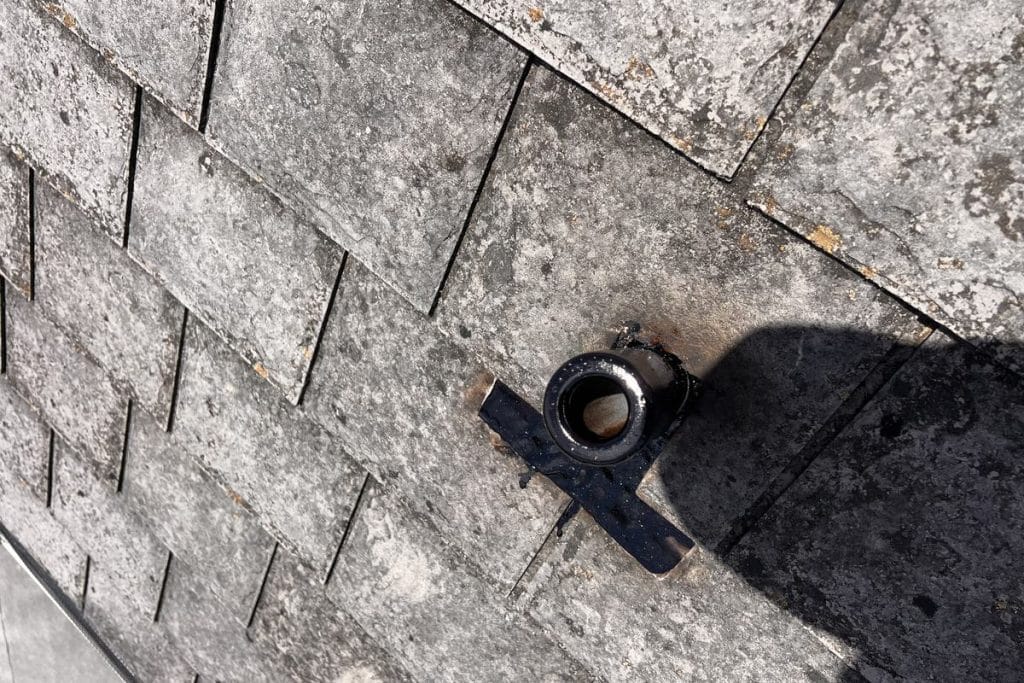
A stain on the ceiling is rarely directly below the hole. Water travels along a rafter, across the deck, and drops where it finds a seam. We trace the actual entry point rather than patching the nearest guess, so the repair only has to happen once.
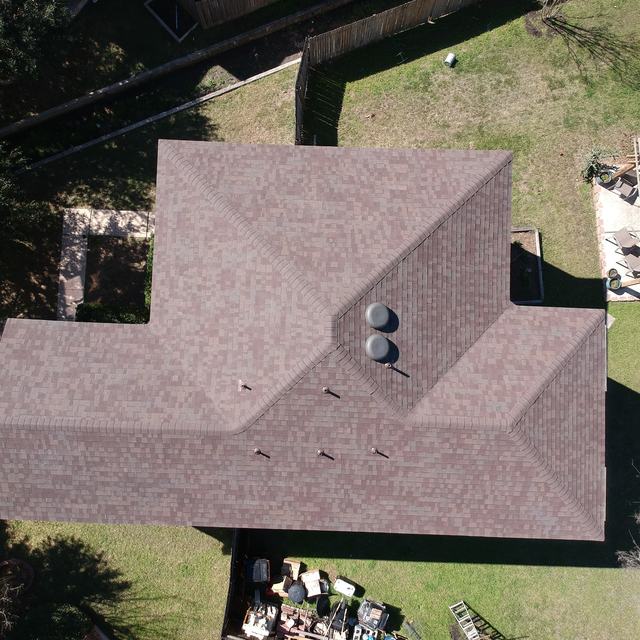
When a roof is past repair, we walk you through the material options in plain terms, put the scope in writing, and give you a schedule we intend to keep. Standard residential tear-offs are one working day once the materials are on site.
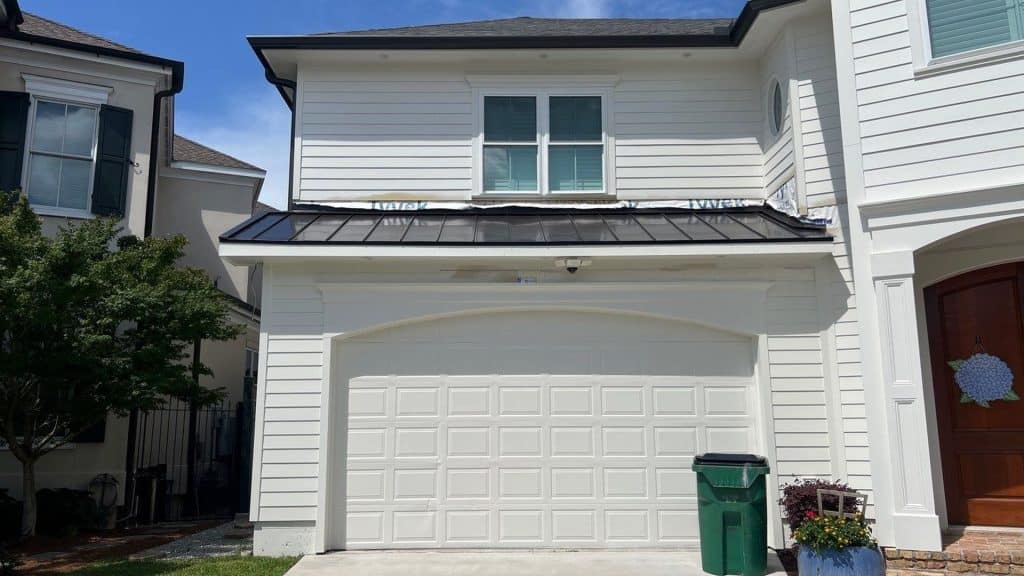
We document the damage the way an insurance adjuster needs to see it: every slope photographed, every impact mark noted, and a written scope of loss you can hand over directly. We meet your adjuster on the roof.
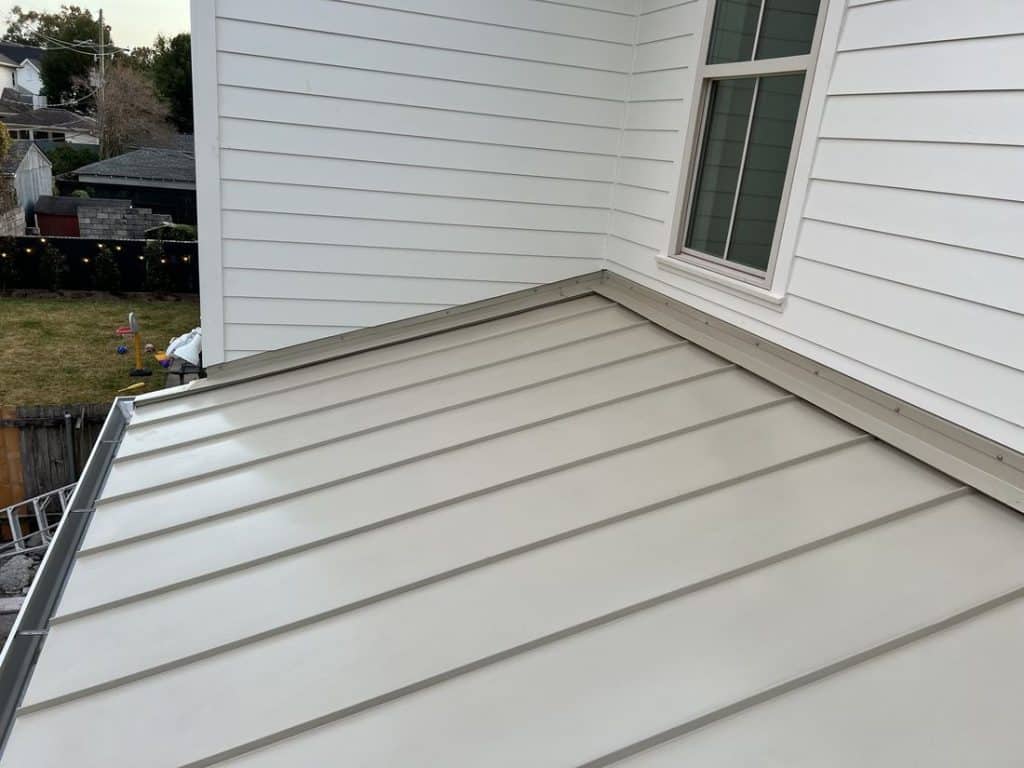
The parts of the roof system people forget. Overflowing gutters push water into the fascia and down into the foundation. Rotted soffit lets heat and moisture into the attic, which is where a shingle roof starts failing from underneath.
A documented annual inspection catches small problems before hurricane season, and gives your insurer the maintenance record they increasingly ask for. If the roof has three good years left, we will tell you that.
We put the whole job on paper before anybody climbs anything. This is that piece of paper, and there is nothing on it you will not have seen first.
A roofer gets on the roof, not just in the driveway. Every slope photographed, every flashing and penetration checked, and the attic looked at from the inside wherever we can get to it. You get a written condition report before anybody says a number.
Usually inside the week. Same day if it is actively leaking.
A line-item written estimate, not a range on the back of a card. You can see the materials, the labor, and what is optional. If it is an insurance job a scope of loss goes with it, in the format your adjuster actually wants.
No pressure, no expiring discount, no second visit to close you.
Nothing comes off your roof until your materials are sitting on the property. That is the whole reason a one-day tear-off is possible, and it is why we will not start a job on a supplier’s promise that the shingles are on a truck somewhere.
You will see the delivery before you see the crew.
Tear-off, decking checked and replaced anywhere it has gone soft, leak barrier, deck protection, starter strip, shingles, ridge cap. Then a magnet sweep of the yard and the driveway before anyone drives away.
We only open what we can close again the same day.
The inspection, the written report and the estimate all cost nothing, and there is no obligation afterward.
Book a free inspectionGrouped by what they actually do, so you can find yours without reading all nineteen. Every one is handled by the same licensed team.
The jobs that put a roof back on, or keep it there another decade.
Full tear-off and a new roof in one working day
View service →The entry point traced, not the nearest guess
New build and additions, flashed and vented properly
Same-day tarping, around the clock in storm season
Impact marks documented the way an adjuster needs
Bringing a tired roof back before it needs replacing
Licensed handling and documented disposal
Where roofs in this city actually fail. Rarely in the open field.
Where the water gets in, not where the stain shows
View service →The layers nobody sees, and the ones that decide how long the roof lasts.
Ice and water barrier where wind-driven rain gets in
View service →Reflective and elastomeric systems for flat sections
Stops the attic cooking the deck from below
Ridge and soffit airflow, checked on every job
Every slope photographed, written report you keep
Annual checks that keep the warranty intact
Fiber cement, vinyl and metal, installed in-house
One in-house crew covers all nineteen, so it stays one phone call whichever one you need.
A roof is not one product, it is four layers that have to be right in order. Most of them are also what GAF requires before the WindProven Limited Wind Warranty applies. That warranty runs fifteen years, with no maximum wind speed and no named-storm exclusion. Leave one out and the roof still works. It just is not covered the same way.
Three things go onto a bare deck before a single shingle does, and you will never see any of them again. Starter strip seals the eave edge so wind cannot get a finger under the first course. Leak barrier goes into the valleys and around every penetration. Deck protection covers everything else, and it is what keeps your ceilings dry between tear-off and the last nail.
Roofs almost never fail in the open field. They fail where something comes through them: a vent stack, a chimney, a skylight, the wall of a dormer. Every penetration gets new metal. We do not re-use flashing that was already bent once, because the second bend is where the leak starts.
The surface everybody actually looks at, and the one part of the system the wind warranty will not bend on. LayerLock is the mechanical bond through the common bond area of the shingle. Without that exact shingle there is no WindProven, whatever else is on the roof.
The last course, and the one that decides how long everything under it lasts. Ridge cap closes the peak. Ridge and soffit vents let the attic breathe, and an attic that cannot breathe cooks the deck from underneath and takes years off a roof that was installed perfectly.

We install the system that earns it. GAF backs it: 15 years, no maximum wind speed limit, and no named-storm exclusion, which is exactly the clause most roofing warranties leave in. It needs Timberline shingles with LayerLock plus at least four qualifying accessories. We tell you at the estimate whether your roof qualifies and what that costs.
We name the actual products going on your roof before you commit to anything.
Neither of these is about roofing. Both change what a storm-damaged roof ends up costing you.
Louisiana puts a time limit on claims for storm damage, and it runs from the date of the loss, not from the day you noticed the ceiling.
The practical version: if a named storm has been over your roof and nobody has been up there since, do not assume the window has closed. Check the date of the storm against your policy before you decide it is too late. Your policy can set its own terms on top of the statute, so read it.
That means depreciation comes off the payout. A twenty-year-old roof can be fully covered and still leave a gap between what the insurer pays and what the job costs. Knowing which one your policy carries changes how you plan.
We are not insurance adjusters and we will not tell you your claim is guaranteed. What we do is document the damage thoroughly enough that your adjuster has everything they need to price it properly.
Not on the list? Ask us directly. Somebody who has actually been on a roof will answer.
Talk to a roofer504-229-3955No. The inspection, the written condition report and the estimate all cost nothing, and there is no obligation afterward. If the roof has three good years left, we will tell you that.
Emergency tarping is same day. A routine inspection is usually inside the week. We call you back the same business day either way.
No. The crew that inspects your roof is the crew that works on it. No strangers arriving unannounced on your property.
We meet your adjuster on the roof and hand over photographs, measurements and a scope of loss. We are roofers, not public adjusters, so we do not negotiate the claim itself and we will not promise you an outcome.
Yes, both. Ask any roofer for their license number before they set foot on your property, especially after a storm, and check it before you sign anything.
Name and phone are enough. We call back the same business day.
No cost, no obligation, no door-knocking afterward.
In a hurry? Call 504-229-3955